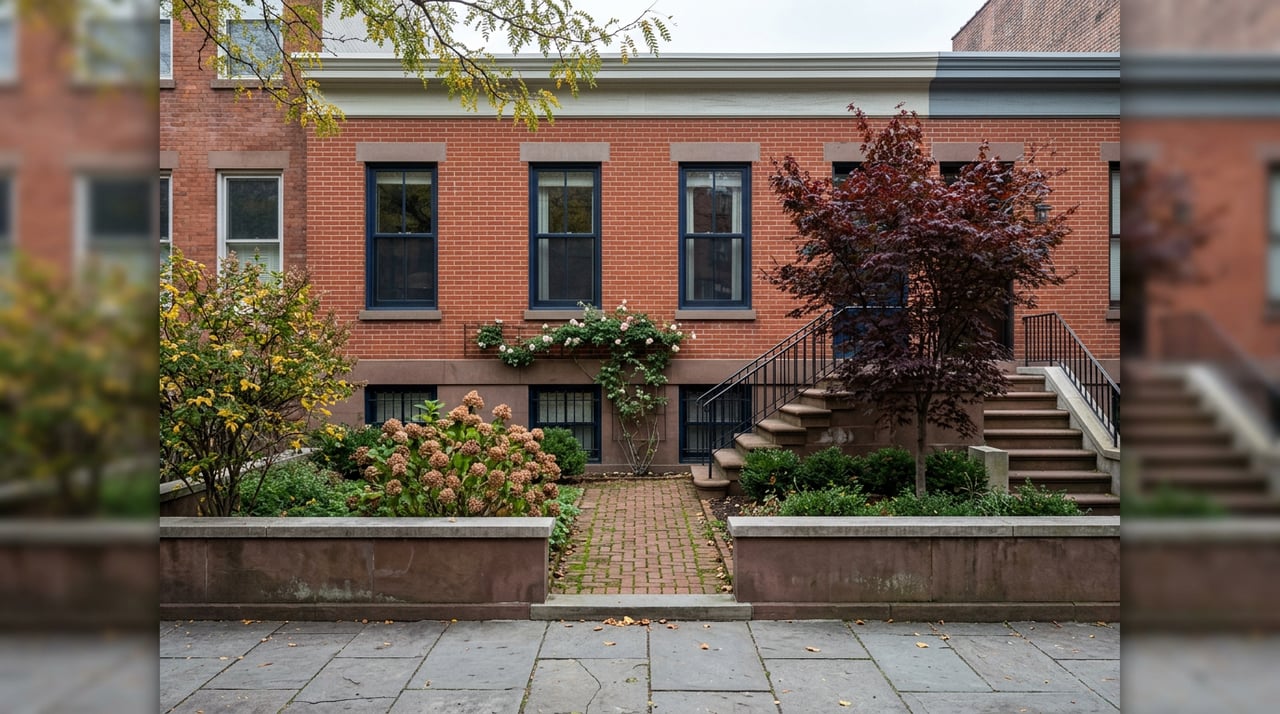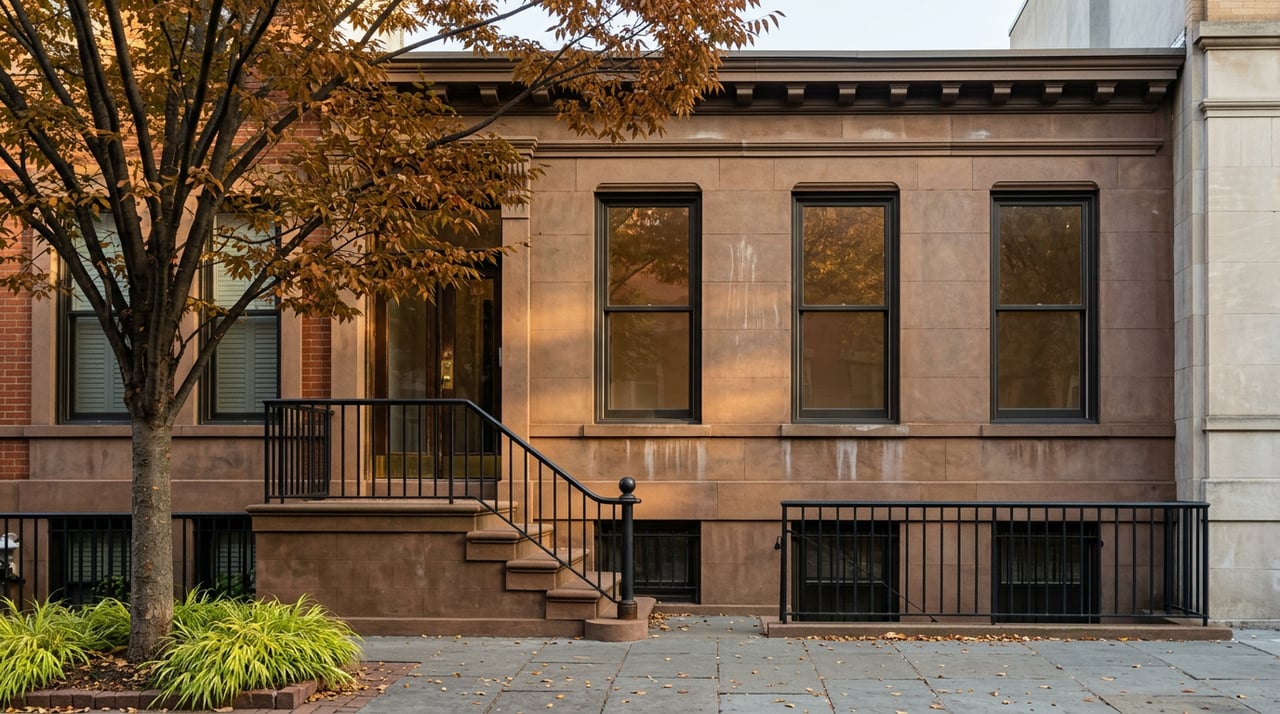
A few blocks from Fort Greene Park, a butter yellow Italianate house that has stood since sometime before the Civil War is about to come down. For years the working assumption on that stretch of South Oxford Street was that a house this old, in a neighborhood this thoroughly associated with historic preservation, was safe by default. In April 2026 the Landmarks Preservation Commission ruled otherwise. Reviewing a request to designate 158 South Oxford Street as an individual landmark, staff concluded that although the house still had some historic fabric, decades of alterations meant its architecture no longer met the bar for protection. The property had once appeared on an inventory for a proposed expansion of the Fort Greene Historic District that was never adopted, which is exactly why it sits outside the line today. Demolition approvals and a new building application are already active on the site.
Nothing about that outcome is unusual for how New York's landmark system works. What it reveals matters if you own, or are about to sell, a brownstone in Fort Greene. The neighborhood is not landmarked the way it gets described at open houses, as a blanket fact about the zip code. It is landmarked at the parcel level, and the boundary runs unevenly enough that a records check can produce a different answer for one house than for the one next door. That difference, not the age of your kitchen or the quality of your last renovation, is what's quietly deciding how fast a Fort Greene sale moves this fall.
The line runs through blocks, not around them
The Fort Greene Historic District was mapped by the Landmarks Preservation Commission in 1978, and the map it drew deliberately didn't sweep in every block that looked the part. South Oxford Street's exclusion is the most recent proof, but it isn't the only kind of edge case the district produces. Back in 2019, the commission spent two hearings debating a proposal for five new rowhouses at 352 to 360 Clermont Avenue, inside the district, arguing over the size of a single bay window and the number of curb cuts before granting approval. Outside the line, a historic house can lose its case for protection entirely and face a wrecking ball. Inside the line, new construction gets measured down to the inch.
A New York building compliance firm that works across several landmarked Brooklyn neighborhoods put the practical consequence plainly:
We've seen neighbors on the same block face completely different requirements because one side falls within Fort Greene Historic District and the other doesn't.
For a seller, that's not a historical curiosity. It's the first fact a buyer's attorney will confirm before writing an offer, and it shapes everything from what the buyer can do to the facade after closing to how a past renovation on your own house gets read during due diligence.
Three approval tracks, three different calendars
Even within the district, not every project runs on the same clock. The Landmarks Preservation Commission sorts proposed work into three tracks, and knowing which one applies to a past renovation, not just a future one, is what a buyer's attorney is actually checking for.
| Approval track | What it covers | Typical timeline |
|---|---|---|
| Permit for Minor Work | In-kind repairs that don't require a separate city building permit, such as mortar repointing with matching material or window replacement in an existing opening | Staff-level review, often decided within about 10 business days |
| Certificate of No Effect | Work that does require a building permit but doesn't affect protected features, such as plumbing or rooftop mechanical equipment | Staff-level review, with a legal decision required within about 30 business days of a complete application |
| Certificate of Appropriateness | Visible facade changes, additions, or anything altering a protected architectural feature | Full commission review with a public hearing, typically adding three to six months |
Most owners can tell you what they did to their house. Far fewer can tell you which of these three tracks the work went through, or whether it went through any of them at all. That gap is exactly where a sale slows down.
Where old work turns into a fall problem
Brownstones accumulate small changes across decades of ownership. A finished cellar. An added bathroom. A converted floor that no longer matches the certificate of occupancy on file. None of it shows up while you're living in the house. It shows up during a sale, because a buyer's attorney runs the same two searches on every landmarked property: a Department of Buildings violation history and an LPC file check.
An open landmark violation doesn't sit quietly waiting for the next owner to deal with it. It travels with the deed. A buyer who finds one mid contract generally has three moves available: ask for a closing credit, ask the seller to resolve it before closing, or walk. Every one of those options costs time, and a fall closing calendar in Fort Greene doesn't have much time to spare.
What the market is actually pricing in
The pattern shows up in the numbers, not just the paperwork. Over the three months ending May 2026, the median sale price for a Fort Greene home was $1.5 million, up 6.3 percent from the same stretch a year earlier. Price per square foot moved even faster, climbing 14.6 percent to $1,220. At the same time, homes sold in an average of 55 days, down from 62 the year before, while just 15 homes closed in May 2026 compared with 17 in May 2025.
Read together, that's a market with fewer transactions, a sharply rising price per square foot, and shrinking time on market. That combination points to buyers with financing in hand competing hard for anything genuinely ready to close, and moving on quickly from anything that isn't. A brownstone with clean Department of Buildings and Landmarks paperwork is exactly the kind of ready that this fall's buyers are rewarding. A brownstone where an attorney has to pause and ask about an unfiled rear addition is the kind of listing that quietly drops out of that fast lane, even when the price and the renovation are otherwise right.
What to pull before you list, not after an offer
The fix isn't a renovation. It's a records check, done before a buyer's attorney does it for you.
Start by searching your own address in the city's building violation records rather than waiting for someone else to find something. Confirm your parcel's actual landmark status directly, since proximity to a historic district and inclusion in one are not the same thing, as South Oxford Street shows. Pull whatever Landmarks paperwork already exists for past work on the house. A completed Certificate of No Effect or Permit for Minor Work on file answers a buyer's attorney's question in minutes. Its absence turns that same question into weeks. If a past renovation touched the rear yard, the roofline, or a window opening and there's no paperwork to show for it, get ahead of it with an architect or a filing expediter before it becomes a contract contingency instead of a pre-listing task.
This is the kind of preparation The Scott / Robles Team builds into the same early timeline as staging and photography, working alongside the architects, attorneys, and expediters who already know which track a given repair falls under. A title question raised in week three of a listing costs far more than the same question resolved in week one.
A few questions worth asking directly
Does every house in Fort Greene need Landmarks approval just to sell? No. Listing and closing on a house doesn't require LPC review on its own. What can require it is anything a buyer wants to do to the exterior afterward, and whether the exterior work already on the house was properly filed. If your building sits inside the historic district boundary, that history sits at the negotiating table even if you never plan another renovation.
What happens if unpermitted work turns up after I'm already in contract? In most cases it becomes a negotiation rather than a legal problem. Buyers typically ask for a closing credit, a price adjustment, or for the seller to file and resolve the issue before closing. Each option takes longer than the same records check would have taken before the house went on the market.
My house is a block from the historic district and I've never filed anything with Landmarks. Am I in the clear? Confirm it rather than assume it. The South Oxford Street case shows that a house which looks and feels like a classic Fort Greene brownstone can sit just outside the mapped boundary. The reverse is just as common, with houses that look ordinary sitting fully inside it.
If you're weighing when to bring a Fort Greene brownstone to market, The Scott / Robles Team can walk the property's actual Landmarks and Department of Buildings history with you before a buyer's attorney does it first. Contact us to start with a conversation about your specific address, not a generic checklist.