By the last week of August, the conversation on Court and Smith is all storefronts. Trudie's Tavern is several months into its run at the old Buttermilk Channel corner. Sal Lamboglia's name is turning up on multiple doors within a few blocks of each other. Court Pastry's window has been dark since April, and everyone still mentions it. That's the version of Carroll Gardens that gets written up every few weeks, and it's not wrong, exactly. It's just not where the season actually turns.
The real signal that summer is ending here doesn't come from a lease. It comes from a city block bordered by Carroll, President, Court, and Smith Streets, where a bronze soldier has stood watch since 1895 and a set of crushed-stone bocce courts start filling with regulars the moment the afternoons cool off. If you've lived here more than one September, you already know the storefronts change every year and the park doesn't. That's worth sitting with for a minute, because it says something about how this neighborhood actually organizes itself that no restaurant roundup can.
The Fixed Point
Carroll Park predates almost everything else people point to when they talk about this neighborhood's character. The land was set aside as a private garden in 1846 and handed to the city seven years later, which puts it ahead of the brownstones that now ring it and ahead of the bridge the borough is named for. At 1.87 acres it's not a large park by any city standard, but it's a complete one: two playgrounds, a basketball court, a Little League diamond, and the bocce courts along the Smith Street side that have hosted Italian-American players since the neighborhood's Genoese, Sicilian, and Calabrese settlers arrived in the early twentieth century.
The bronze soldier at the park's eastern entrance is a Civil War memorial to a volunteer infantry unit, installed in 1895. It's easy to walk past without registering it. It's also the only fixed point in the neighborhood that hasn't moved, been renamed, or changed hands in over a century. Everything else on this list, including the restaurants everyone's talking about right now, will look different in five years. The soldier and the bocce courts won't.
The Courts Run On Their Own Calendar
The bocce courts are first-come, first-served outside of tournament play, no fee and no reservation required. That sounds like a small administrative detail until you watch what it does to a late-August afternoon. Regulars show up most weekdays when the weather cooperates, and Saturday late mornings are the busiest social window of the week. Bring a set of balls and a willingness to talk in English or Italian, and a pickup game tends to materialize inside ten minutes.
What changes as summer tips into fall isn't the rules. It's the density. The courts that were half-empty on a humid July afternoon start drawing a steadier crowd once the heat breaks, and that shift has nothing to do with what's happening a block over on Court Street. It's the neighborhood's oldest recreational habit resuming its natural rhythm, independent of whatever chef just signed a lease.
The Greenmarket Keeps Its Own Sunday
Across Carroll Street from the park, alongside PS 58, the Carroll Gardens Greenmarket has run every Sunday, year-round, since 2007. It doesn't pause for the season and it doesn't chase whatever's trending on Smith Street. The stalls that show up in late August will look different from the ones in December, but the market itself, the fact that it's there every single Sunday regardless of what's opening or closing nearby, is one more piece of evidence that the neighborhood's actual infrastructure runs on a longer clock than the restaurant press.
Who Actually Runs The Park
None of this happens by accident. Friends of Carroll Park is the volunteer group behind the park's upkeep, meeting in the Robert Acito Park House on the Smith Street side of the park to plan gardening, painting, repairs, and the neighborhood's annual Fall Fair. The fair itself is a straightforward affair: vendors selling crafts, housewares, art, books, music, clothes, jewelry, antiques, and collectibles, plus face painting and live music for anyone who brings kids. It's not glamorous. It's also the kind of event that only exists because residents keep showing up to make it happen year after year, which is a different kind of neighborhood signal than a chef with a multi-borough portfolio deciding to open here.
A restaurant opening tells you what an operator with capital thinks the neighborhood can support. A volunteer-run fair that's been happening annually for years tells you what the people who live here actually do with their Saturdays.
Smith Street's Other September Ritual
Restaurants aren't the only thing arriving on Smith Street this fall. MAKERS MANIFEST Carroll Gardens comes to Smith Street on Saturday, October 17, 2026, starting at 10 a.m., bringing local makers and vendors out onto the same corridor that's been dominated all summer by talk of who's taking over which storefront. It's a useful reminder that Smith Street has more than one identity. The dining scene gets the coverage because it changes fast and generates headlines. The maker's market, the Greenmarket, the Fall Fair, these run quieter and slower, but they're the events residents actually plan their weekends around once the season turns.
The Front Yards Were Built For This
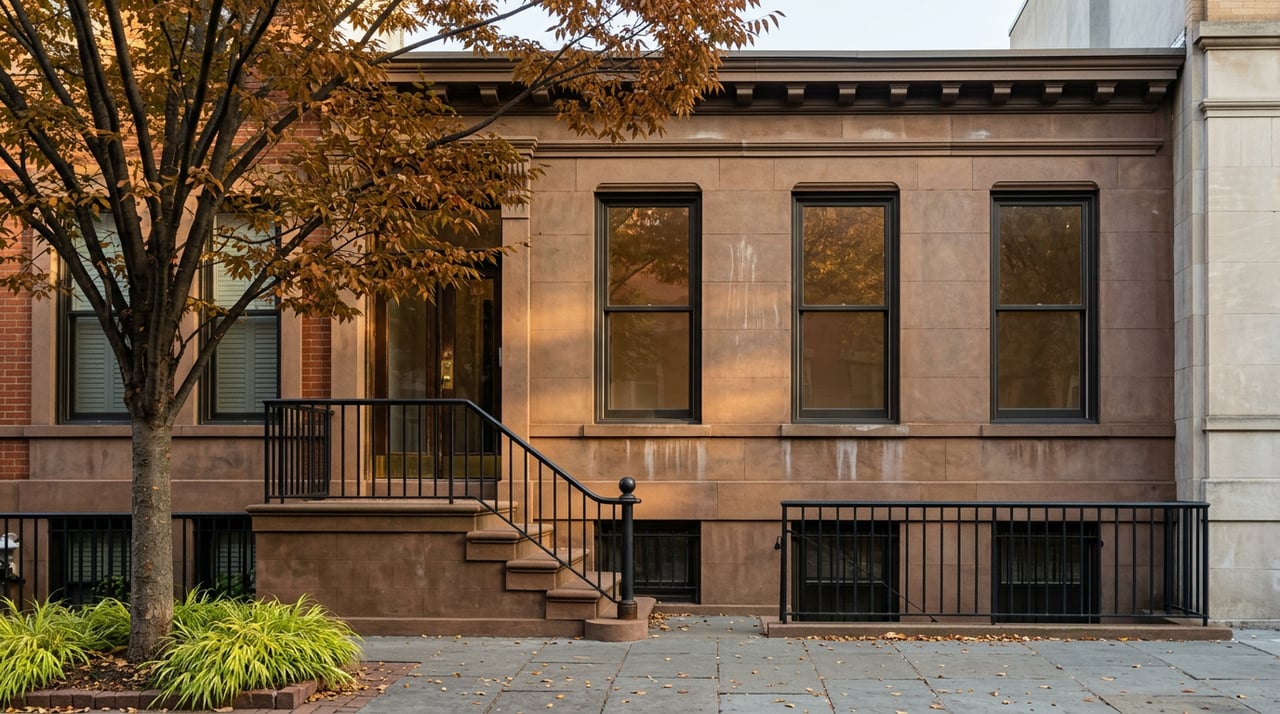
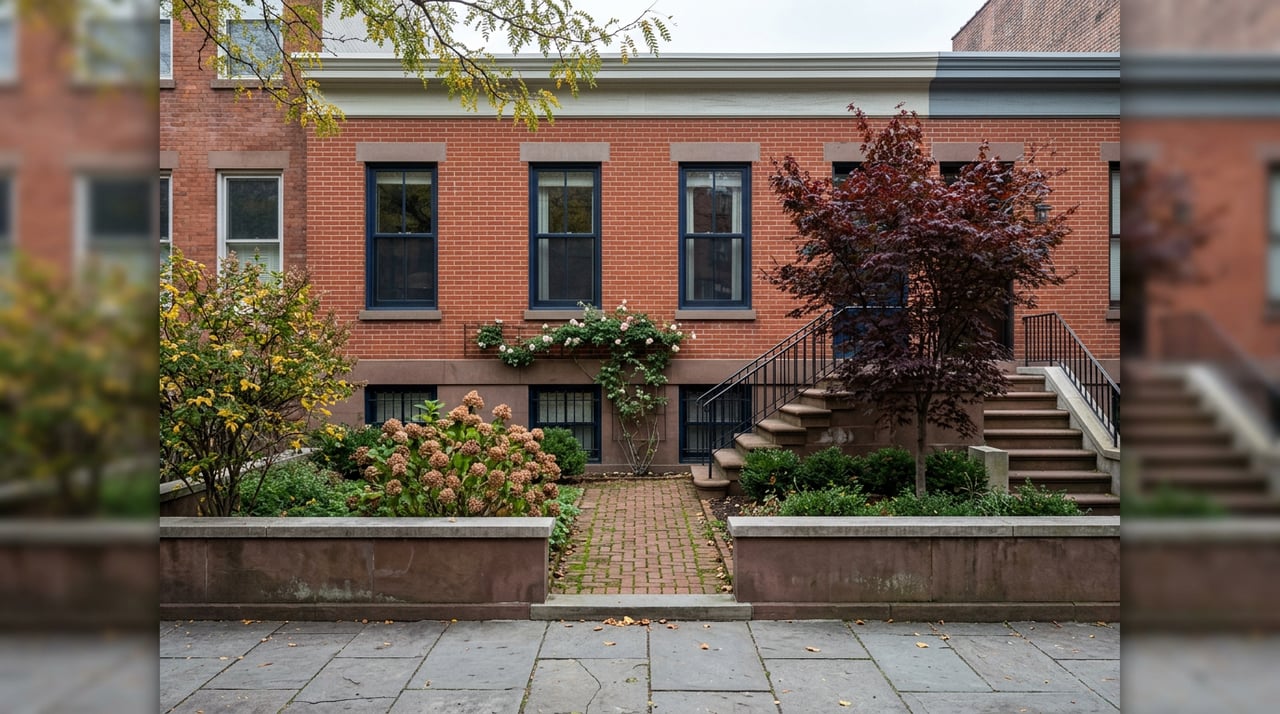
There's a reason Halloween lands differently in Carroll Gardens than it does in most of Brooklyn, and it traces back to an 1846 survey. When the neighborhood's original blocks were laid out, city surveyor Richard Butts required buildings to set back roughly 33 and a half feet from the street, which is what gave the neighborhood both its name and its distinctive character: real front yards, not just stoops. Residents have been using that extra depth for holiday decorating for generations, and by late October the difference shows.
Scotto Funeral Home at Court Street and First Place puts on an elaborate Halloween display every year, running candy and decorations from roughly 3:30 to 7 p.m. on the night itself. A few blocks over, Clinton Street carries the crowd spilling out of the Cobble Hill Halloween Parade, running from Pacific Street straight into Carroll Gardens. None of this requires a single new restaurant to open. It requires the same deep front yards that have been here since the 1840s, put to their most theatrical annual use.
The Quiet Read
Here's the claim underneath all of this: the restaurant turnover on Court and Smith is real, worth watching, and genuinely reshaping what a night out here looks like. But it is not the thing that tells you the season has changed in Carroll Gardens. That signal comes from the park. It comes from bocce courts filling back up, a Sunday market that's kept its schedule since 2007, a volunteer group running a fair out of a park house named for one of its own, a maker's market claiming its October Saturday on Smith Street, and front yards built deep enough in 1846 to still be doing decorative work in 2026.
The storefronts will keep turning over. They always have. The park, the courts, the market, and the yards are the parts of Carroll Gardens that don't need a new operator to still feel like themselves every September.
If you're already living inside this rhythm and thinking about what comes next for your own block, whether that's understanding what your particular stretch of the neighborhood is actually worth or figuring out how a front-yard brownstone shows differently than a rear-garden one, The Scott / Robles Team has spent years reading Carroll Gardens block by block. You can browse what's currently available on the Carroll Gardens neighborhood page, or reach out directly when you're ready to talk specifics.